
1. What Is an Angle?
An angle is formed when two straight lines meet at a point.
This point is called the vertex, and the two lines are called the arms of the angle.
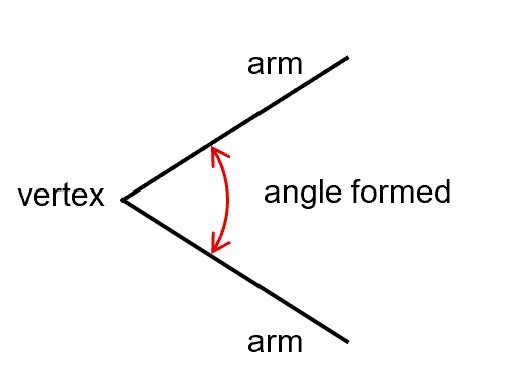
In Mathematics, an angle is also a measure of how much one line has turned relative to the other. A commonly used measurement unit for angles is degrees (°). In the example below, if the straight line AB turns 45° about point A, then an angle of 45° is formed.
Relationship:
− The larger the amount of turning, the larger the angle.
− The larger the angle, the larger the amount of turning.
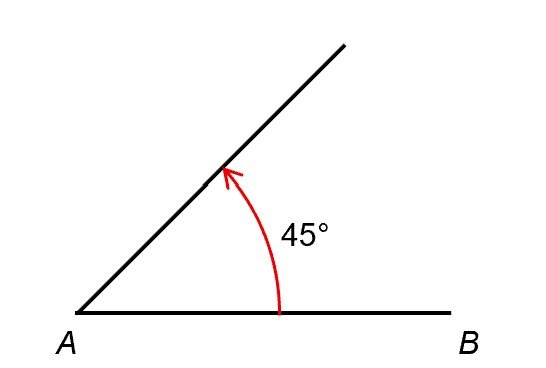
Note: an angle of 0° means there is no turning.
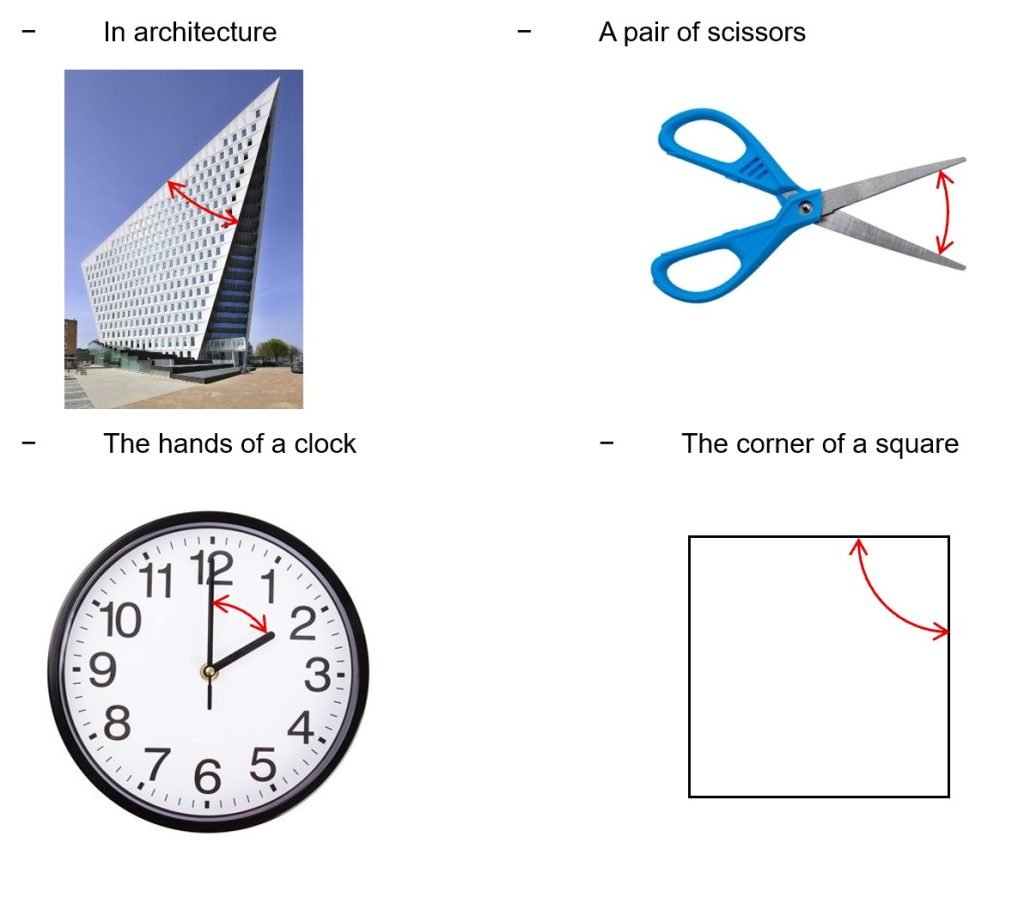
Instances where angles can be seen:
Key word:
• Vertex: The corner point where the lines meet
• Degrees: The measurement unit for angles
Our free Primary 4 Angles Worksheets provide comprehensive practice for mastering the topic. Each concept explanation is followed by practice questions for your child. Answer keys are provided at the end for checking your child’s work.
Consider downloading these revision notes as a PDF for printing or reading. It will be delivered to your email inbox.
2. Why Do We Learn Angles?
Angles are everywhere in our daily lives. Here are some of their everyday applications:
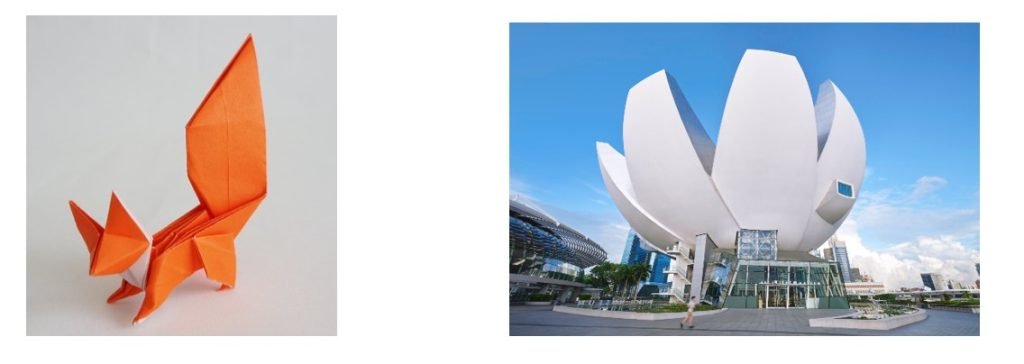
a) Art and Design
Eg Origami folding and building design
b) Playing Sports
The angle of your throw, kick, or aim affects your accuracy.

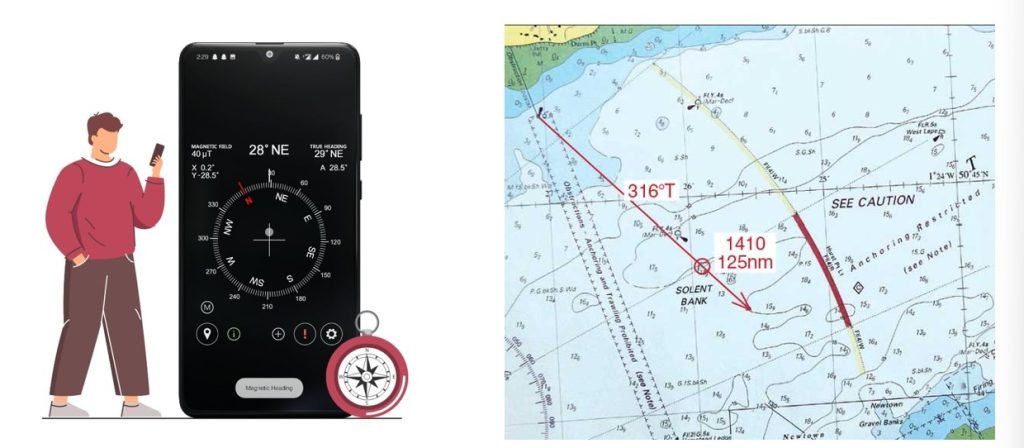
c) Telling Directions
3. Measuring Angles
To accurately measure angles, we use the protractor as shown below. The protractor has an inner scale and an outer scale. Zero on the outer starts on our left. Zero on the inner scale starts on our right. The number lines on the protractor starts from 0 and ends at 180. This is means the protractor can measure angles from 0° to 180°.
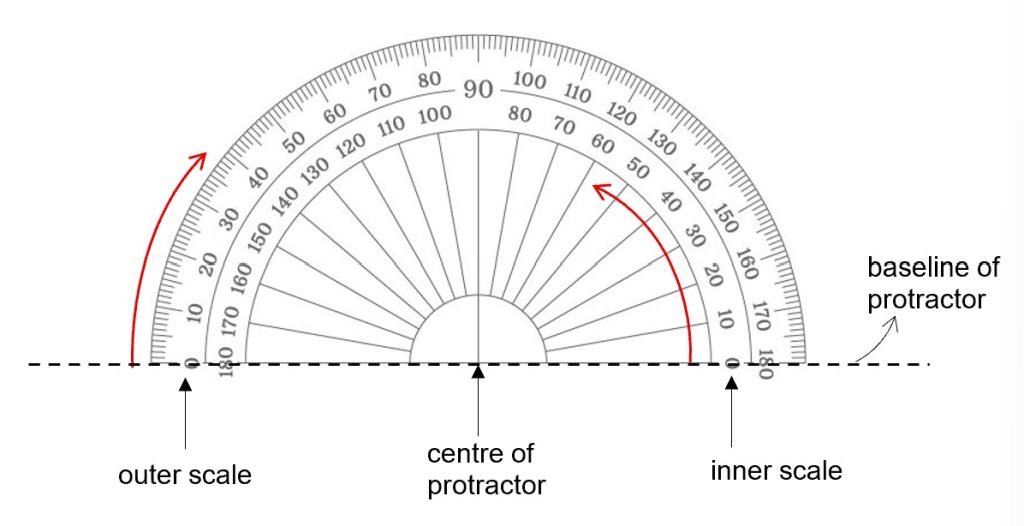
Key word:
- Protractor: Instrument we use to measure and draw angles accurately
- Inner and outer scale: The number lines on the protractor.
How to Measure Angles?
Example 1 (Using outer scale)
Measure the angle below using a protractor.
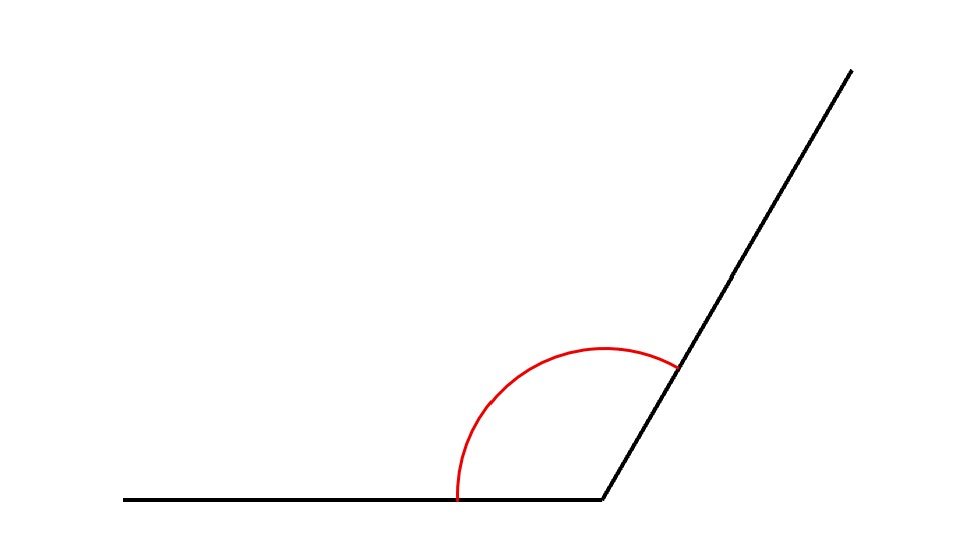
Step 1: Select either arm of the angle as the baseline (say we select the horizontal line as the baseline) and then place the protractor at the vertex of the angle as shown below.
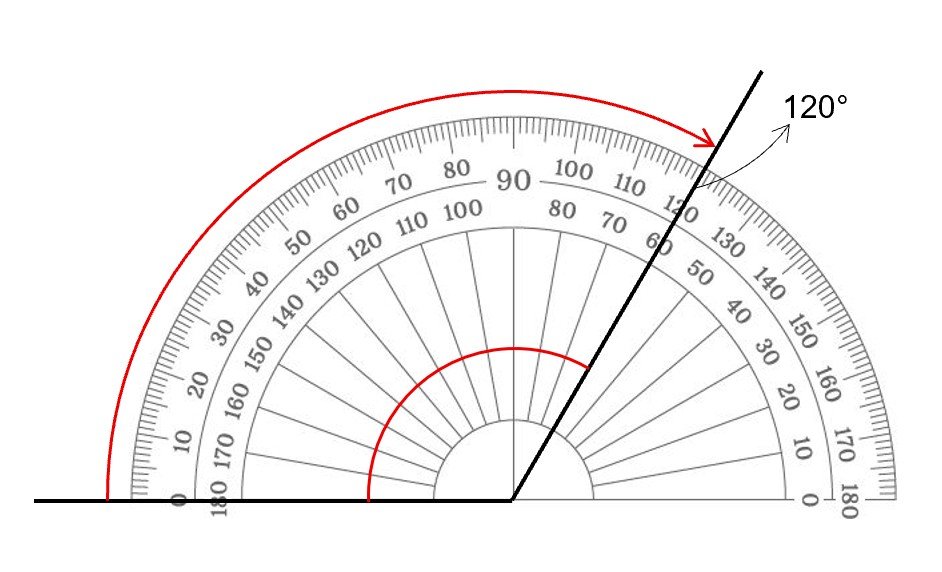
Step 2: Since the arm at the baseline points to the 0 on the left, we use the outer scale of the protractor. Then read off the value on the number line of the outer scale. See that the angle is 120°.
Example 2 (Using inner scale)
Measure the angle below using a protractor.
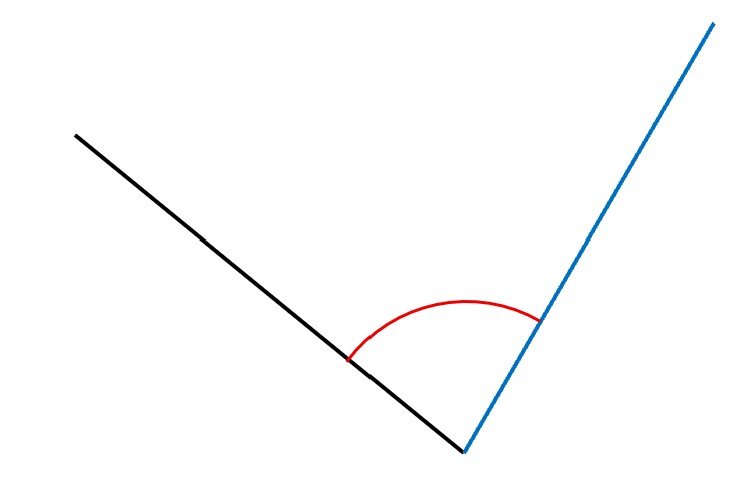
Step 1: Select either arm of the angle as the baseline (say we select the blue-coloured line as the baseline) and then place the protractor at the vertex of the angle as shown below

Step 2: Since the arm at the baseline points to the 0 on the right, we use the inner scale of the protractor. Then read off the value on the number line of the inner scale. See that the angle is 80°.
4. Types of Angles
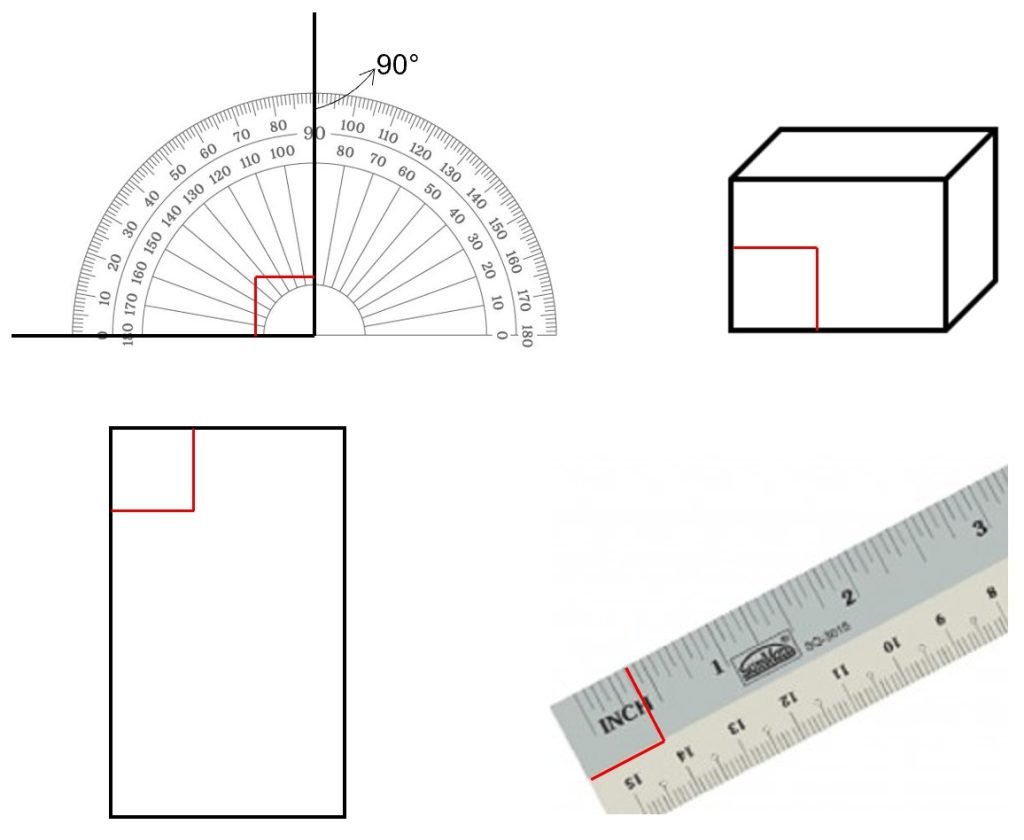
a) Right Angle
- Exactly 90°
- Looks like the corner of a square or rectangle
- Marked with a small square in diagrams
- Examples: Corners of books, rulers, whiteboards, doors, boxes etc
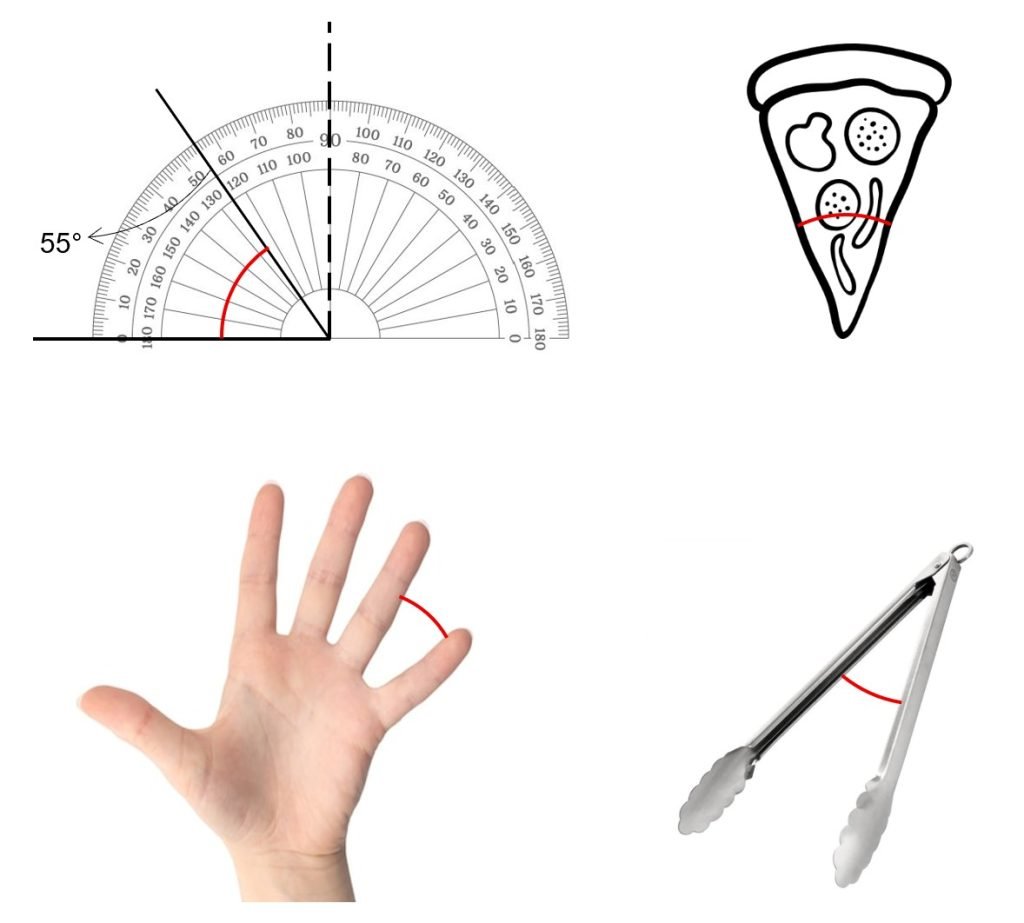
b) Acute Angle
- Between 0° to 90° (less than 90°)
- Sharp and narrow
- Example: Tip of a pizza slice, angle between two fingers, angle formed by tongs.
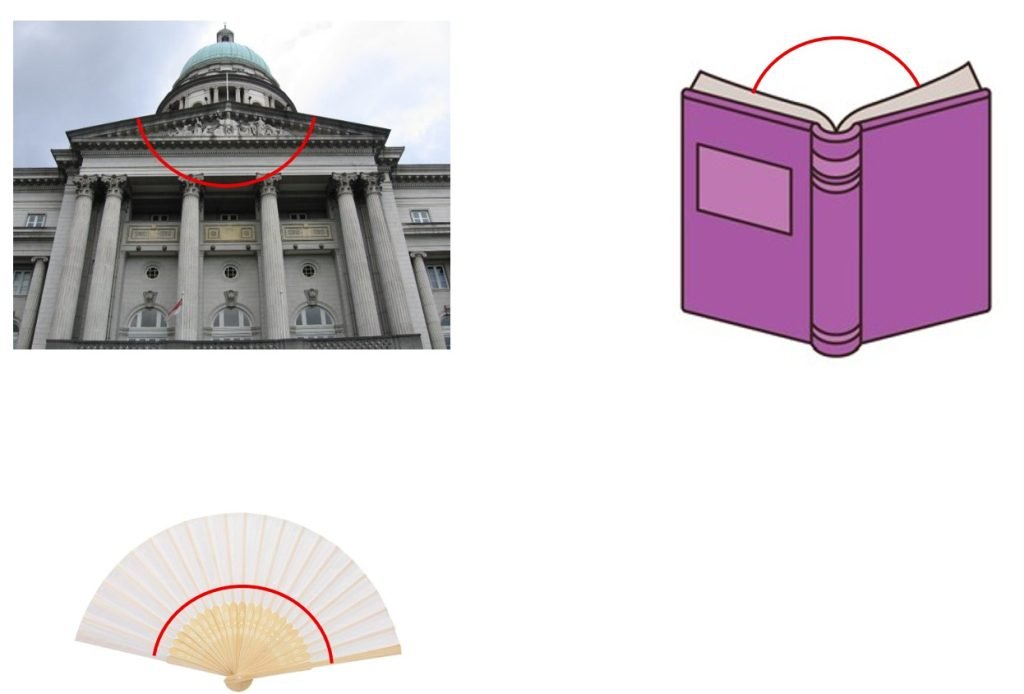
c) Obtuse Angle
- More than 90° but less than 180°
- Wide and open
- Example: Roofs of buildings, opened paper fan and opened book
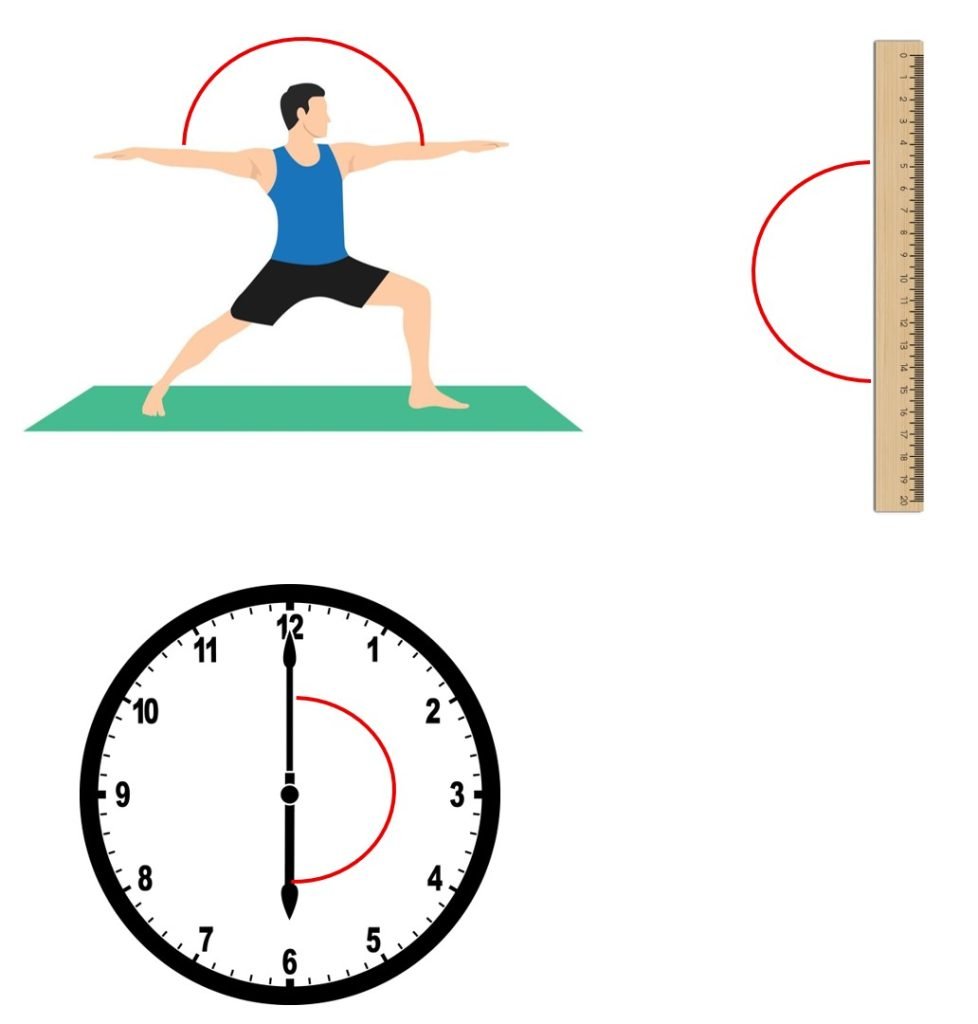
d) Straight Angle
- Exactly 180°
- A straight line
- Example: Opened arms, flat ruler, analogue clocks at certain times of the day
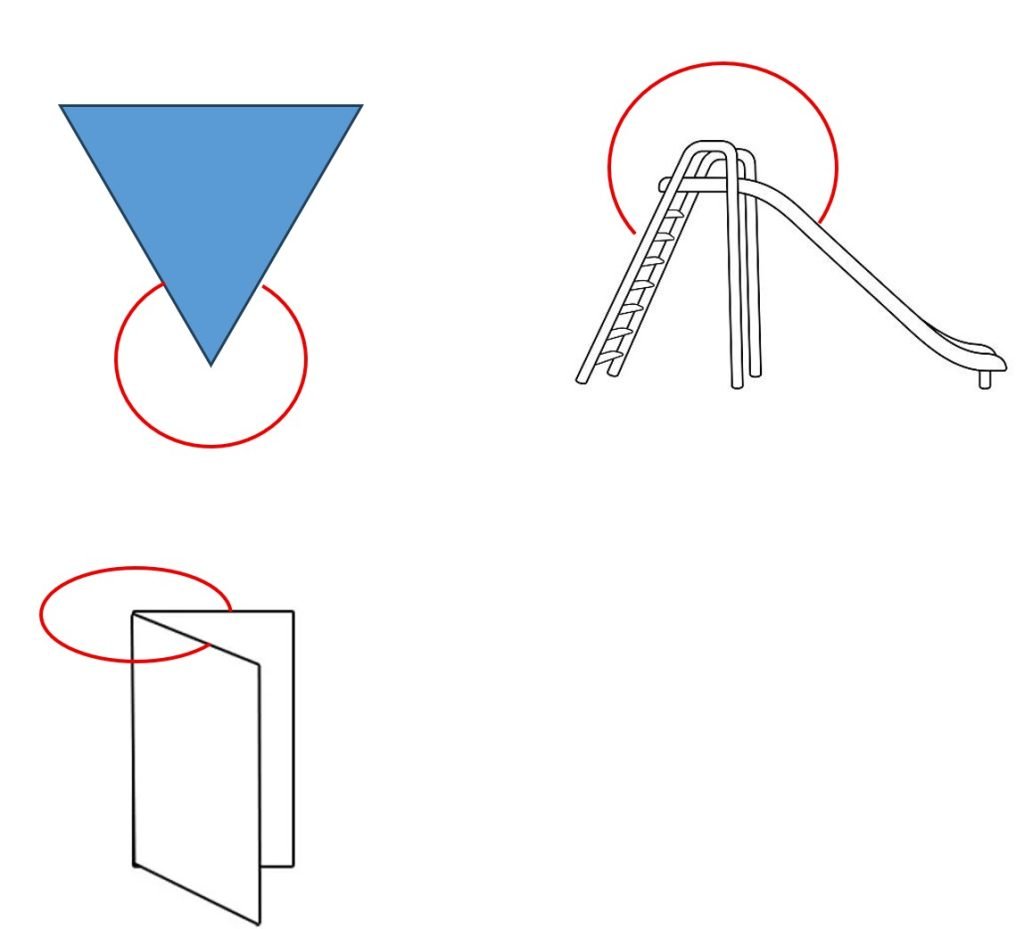
e) Bonus: Reflex Angle
- More than 180° but less than 360°
- Looks like a very big turn
- Example: the angle outside a triangle, the angle formed by a ladder and a slide, and the outside angle formed by a half−folded paper
f) Bonus: Complete Angle
- Exactly 360°
- Also called a full turn.
- Formed when an object turns or rotates in a single direction and ends up at the same position.
- Example: the minute hand of a clock after it turns for a duration of 60 minutes, the Earth makes a complete around the Sun or performing a full somersault turn in midair on a trampoline.

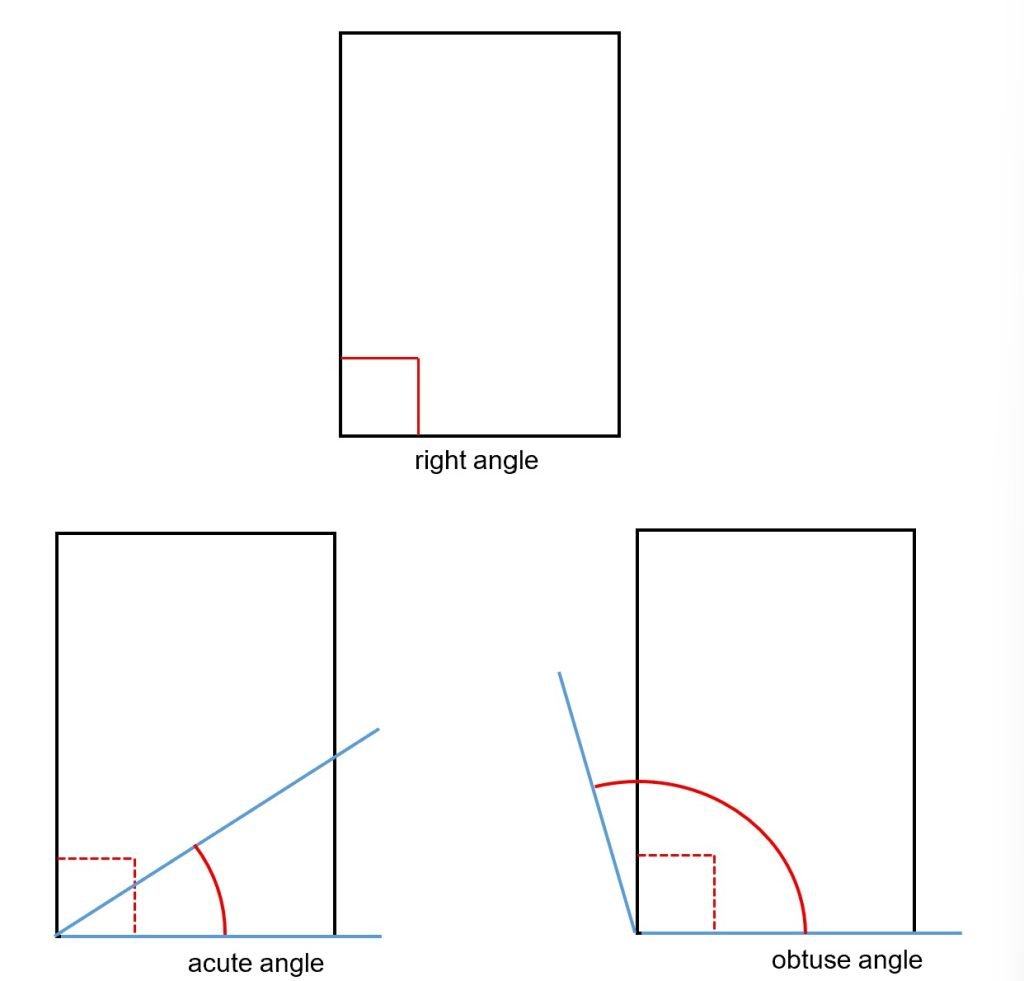
5. Recognising Angles Without Measuring
- Use the corner of paper (or ruler or book) to check
- Smaller than the paper corner → acute
- Larger than the paper corner → obtuse
Key words:
- Right angle: angle that measures exactly 90°
- Acute angle: angle that measures between 0° to 90°
- Obtuse angle: angle that measures between 90° to 180°
- Straight angle: angle that measures exactly 180°
- Reflex angle: angle that measures between 180° to 360°
- Complete angle: angle that measures exactly 360°
6. Ways to Name Angles
We can use three capital letters, with the middle letter as the vertex.
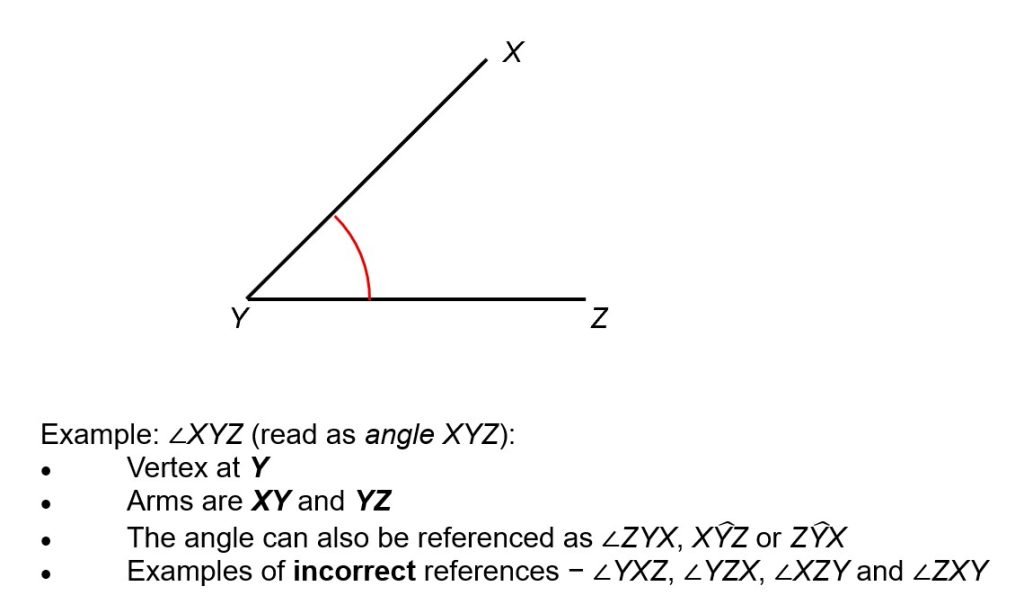
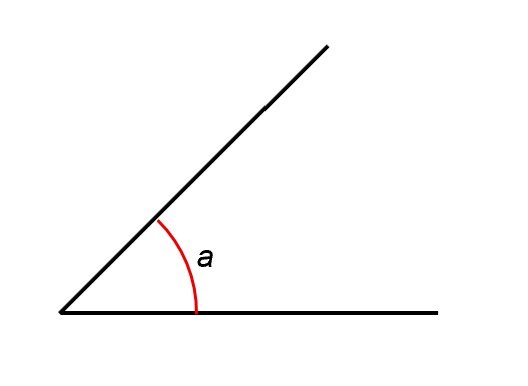
We can also use a single small letter to represent the angle. For example, ∠a as shown below.
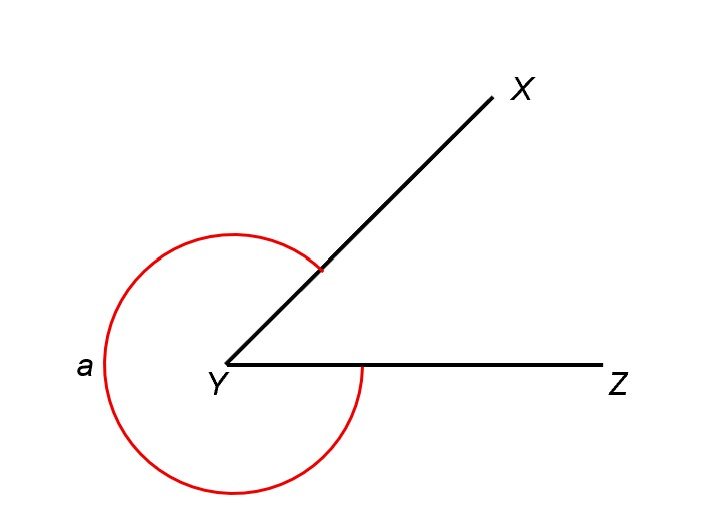
If we are referencing the reflex angle as shown below, then we must add “reflex” to the front of the angle. For example, reflex ∠XYZ or reflex ∠a.
7. Perpendicular and Parallel Lines
- What are perpendicular lines?
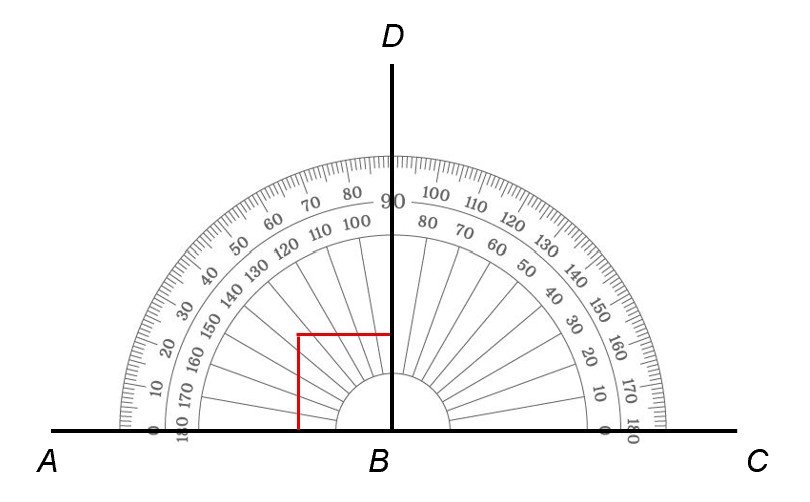
When two lines meet and form a right angle, we say that the two lines are perpendicular. In the diagram above, AC is perpendicular to BD ( AC ⊥ BD ). Perpendicular lines are often indicated with a right-angle symbol.
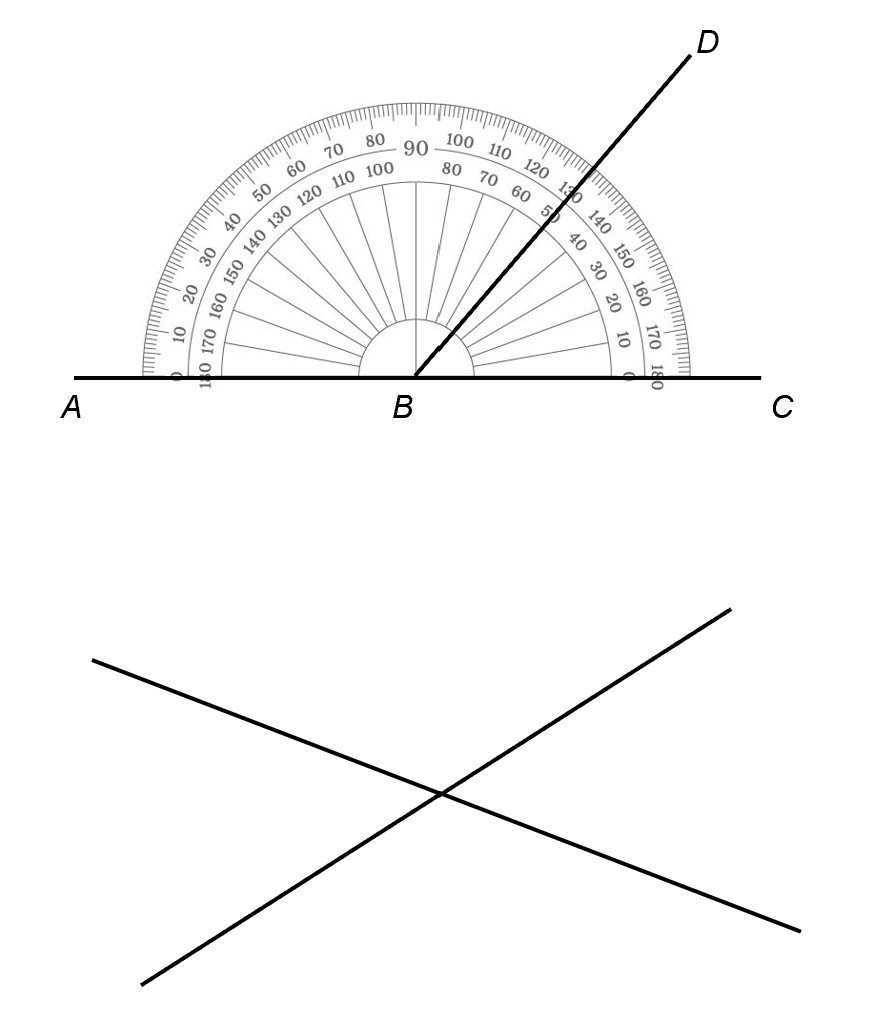
The diagrams below are non−examples of perpendicular lines.
- What are parallel lines?
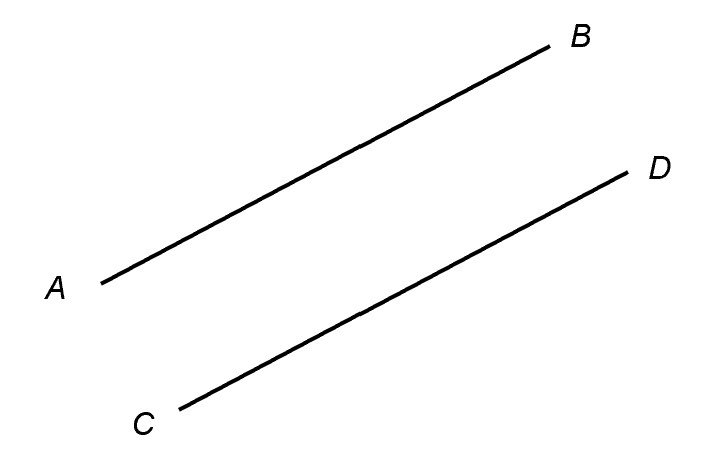
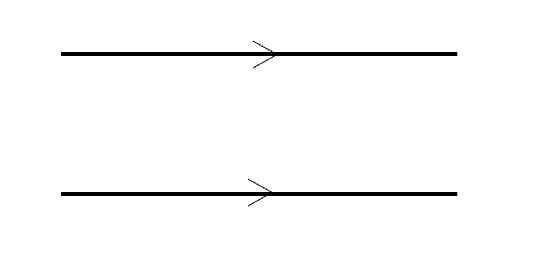
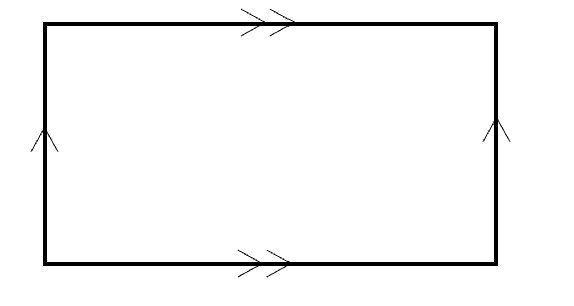
When two lines do not meet, even when they are extended, we say the two lines are parallel. In the diagram above, AB is parallel to CD. We can also write AB // CD. Arrowheads are often used to denote parallel lines. See diagram below.
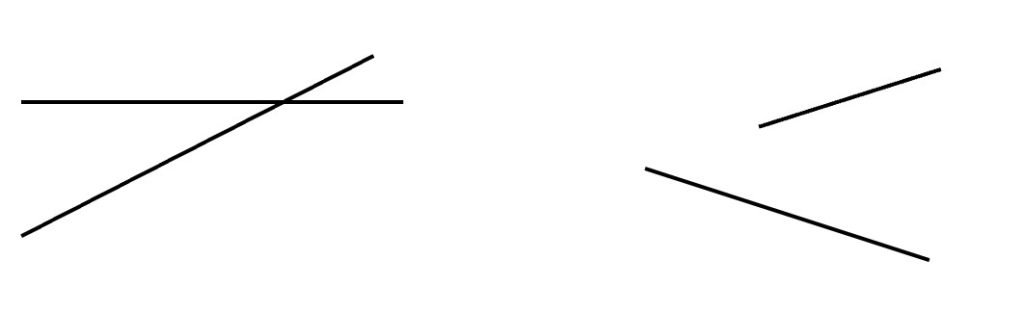
The diagrams below are non−examples of parallel lines.
8. Squares and Rectangles
Squares and rectangles have right angles in all four corners.
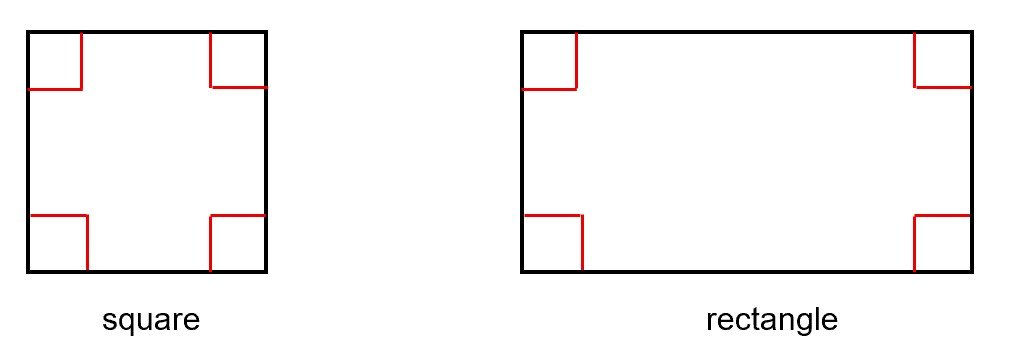
Fun fact: all four angles in a square or a rectangle sum up to 360°.
- Additional properties of squares:
- Squares have 4 equal sides

-
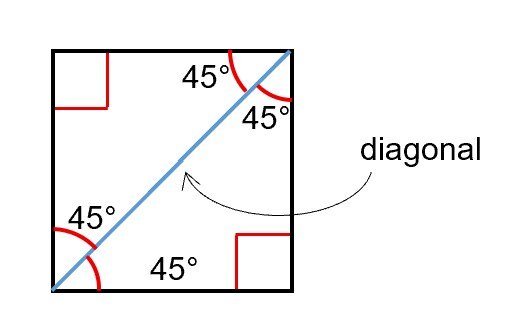
- The diagonal of a square divides the right angles into two equal angles.Each angle measures 90° ÷ 2 = 45°
-
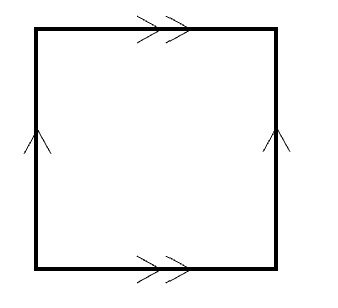
- The opposite sides of a square are parallel.
- Additional properties of rectangles:
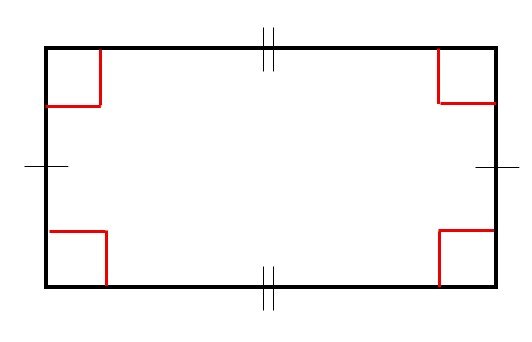
- Rectangles have opposite sides that are equal
-
- Unlike squares, the diagonal of a rectangle does not divide the right angles into two equal angles.
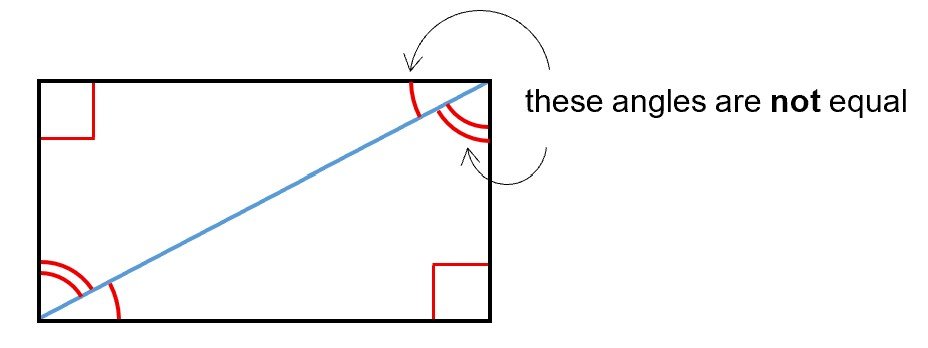
-
- The opposite sides of a rectangle are parallel. This is the same for a square.
Quiz Time
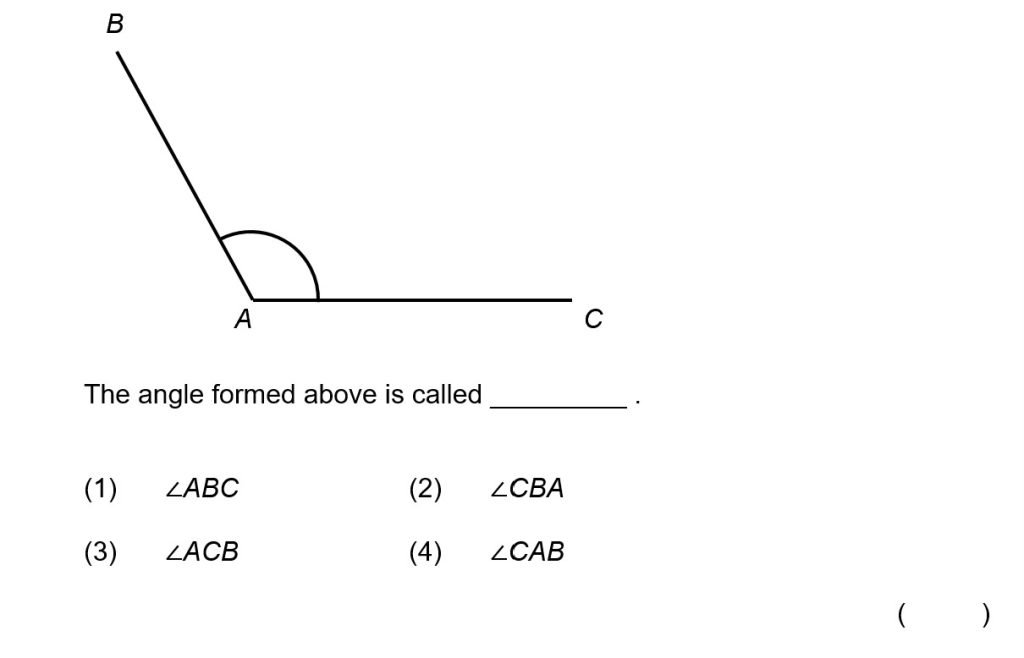
Q1. Two lines, AB and AC, form an angle as shown.
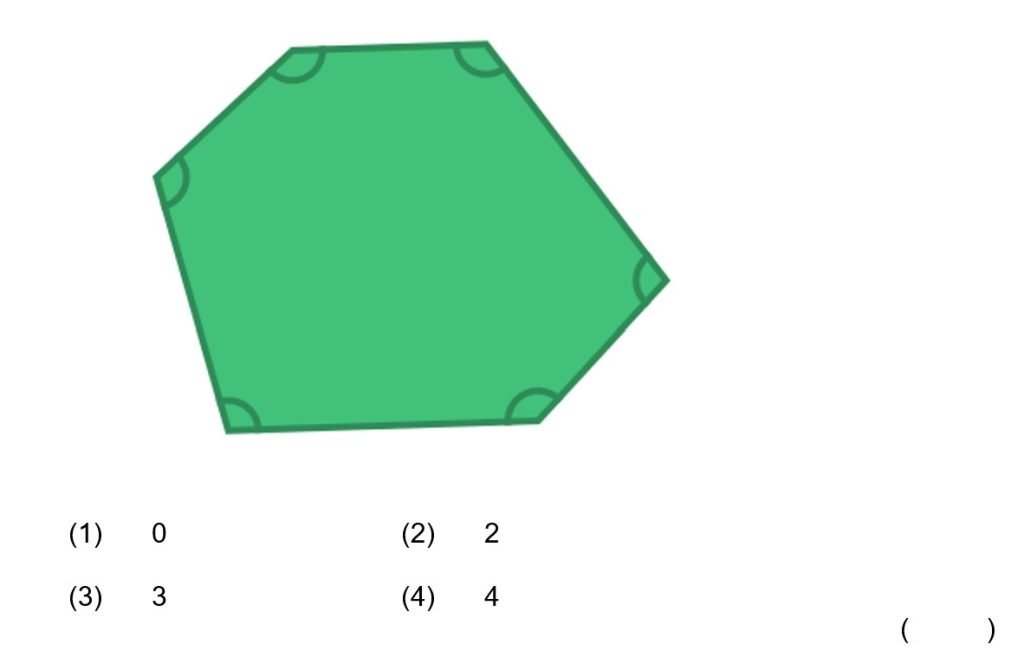
Q2. The diagram below shows a six-sided figure. How many angles inside the figure are acute?
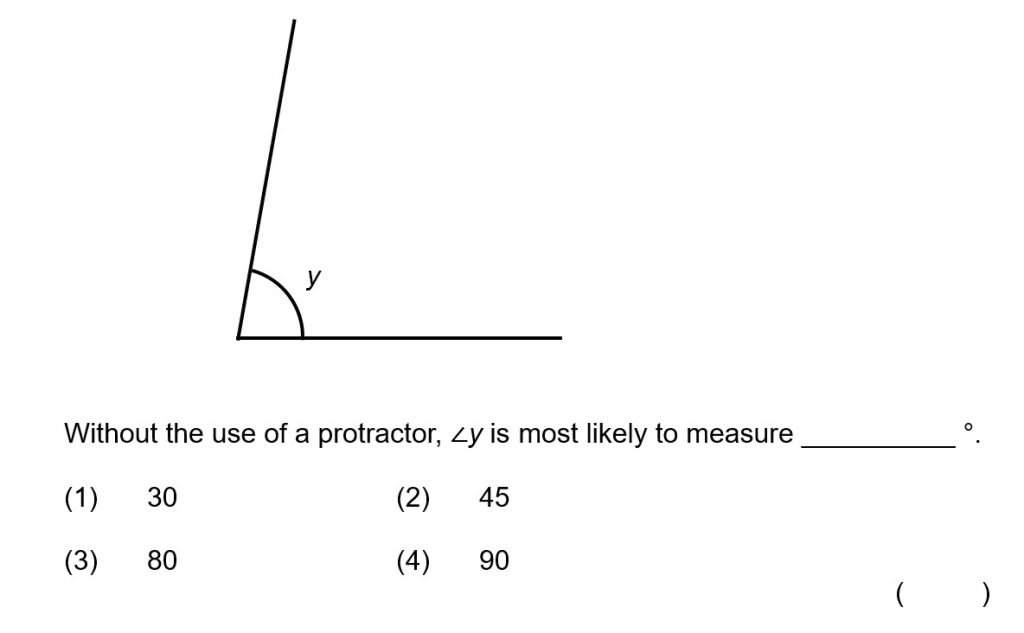
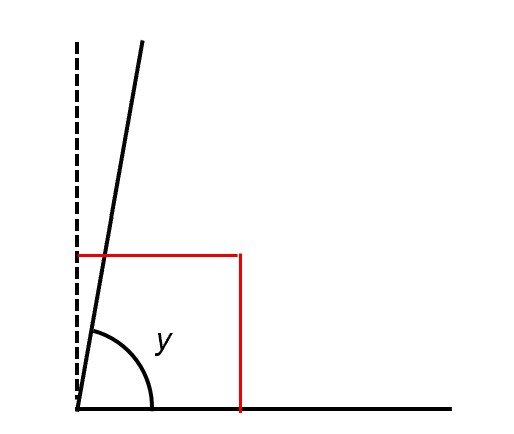
Q3. Two lines form ∠y as shown below.
Q4. Lines are used to form some letters in the English alphabet as shown below.

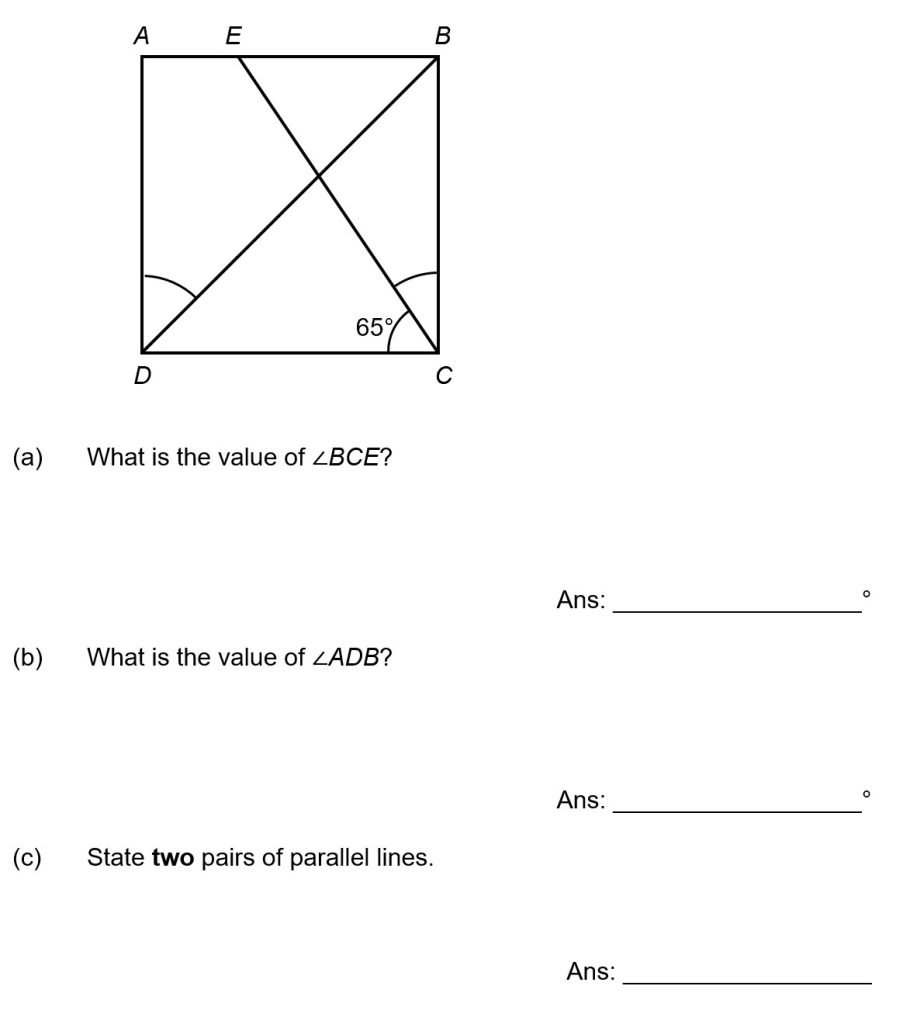
Q5. In the figure (not drawn to scale) below, ABCD is a square and ∠DCE = 65°.
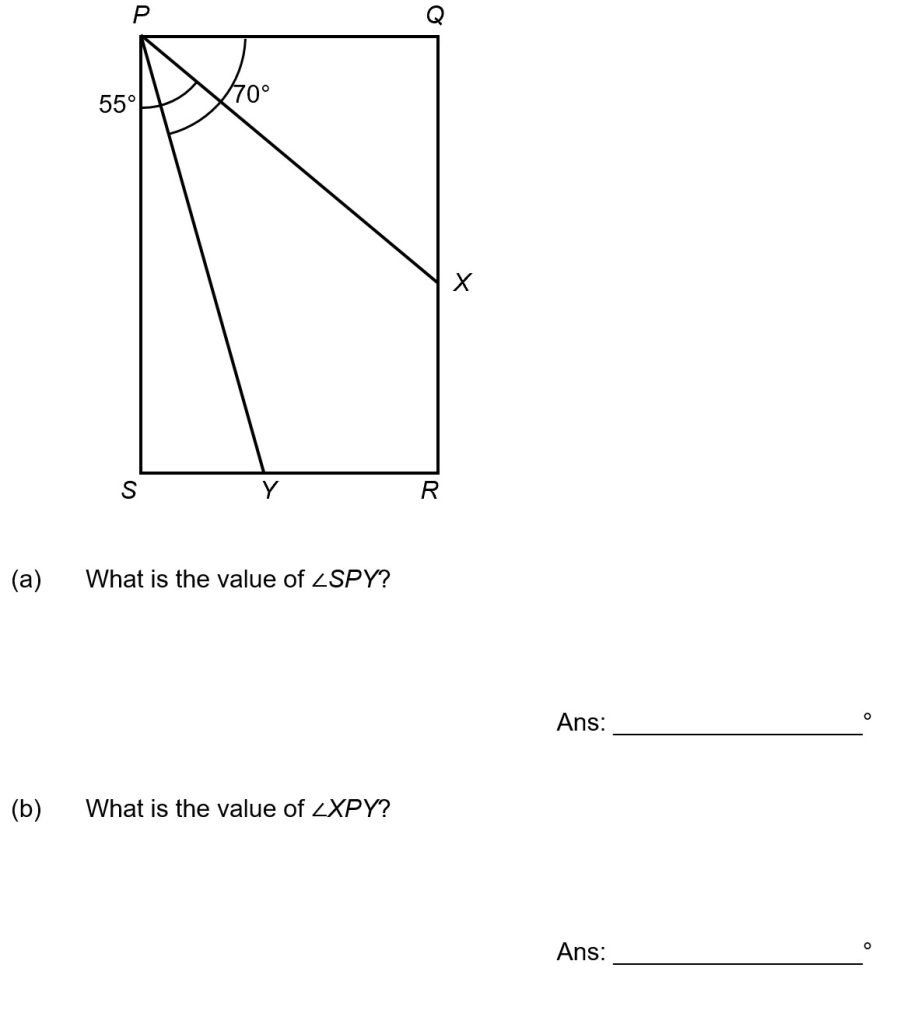
Q6. In the figure (not drawn to scale) below, PQRS is a rectangle and ∠SPX = 55° and ∠QPY = 70°.
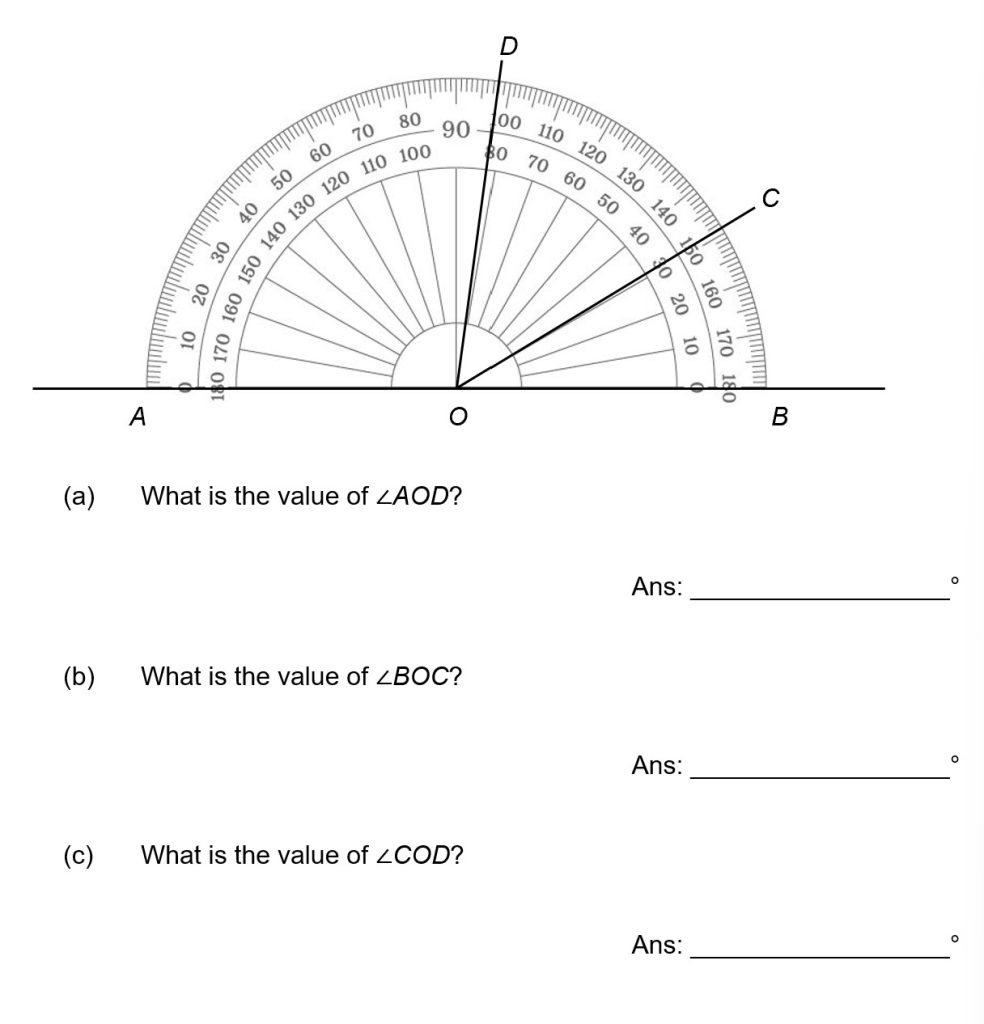
Q7. A protractor is placed on a straight line AOB and centred at O as shown below.
Solutions:
Q1.
Lines AB and AC meet at A, so A is the vertex. When referencing the angle, the middle of the three letters should be A.
Ans: (4)
Q2.
All the angles in the figure are obtuse.
Ans: (1)
Q3.
The angle formed is almost 90°. The option that is closest to 90° is 80°.
Ans: (3)
Q4.
(a)
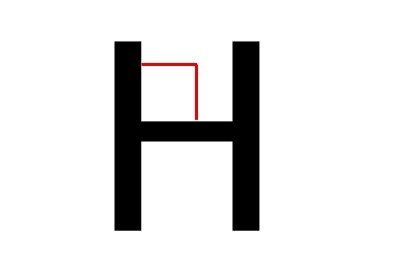
Right angle can be seen for the letter H. The lines in the other letters do not form right angles.
Ans: A, M and Z.
(b)

Q5.
(a) ∠BCD = 90°
∠BCE = 90° − 65° = 25° (ans)
(b) ∠ADC = 90°
∠ADB = 90° ÷ 2 = 45° (ans)
(c) AB // CD and AD // BC
Q6.
(a) ∠QPS = 90°
∠SPY = 90° − 70° = 20° (ans)
(b) ∠XPY = ∠SPX − ∠SPY
= 55° − 20° = 35° (ans)
Q7.
(a) Using outer scale, ∠AOD = 98° (ans)
(b) Using inner scale, ∠BOC = 31° (ans)
(c) Using inner scale, ∠COD = 82° − 31° = 51° (ans)
OR
Using outer scale, ∠COD = 149° − 98° = 51° (ans)
Need More Revision Notes for Primary School Math?
Check out our exam guide on other topics here!
Consider downloading these revision notes as a PDF for printing or reading. The digital file will be sent to your email inbox.
Does your child need help with Mathematics?
1) Live Zoom Math Lessons at Grade Solution Learning Centre
At Grade Solution Learning Centre, we are a team of dedicated educators whose mission is to guide your child to academic success. Here are the services we provide:
– Live Zoom lessons
– Adaptably™, an AI-powered learning platform that tracks your child’s progress, strengths and weaknesses through personalised digital worksheets.
– 24/7 Homework Helper Service
We provide all these services above at a very affordable monthly fee to allow as many students as possible to access such learning opportunities.
We specialise in English, Math, Science, and Chinese subjects.
View our fees and schedules:
2) Pre-recorded Online courses on Jimmymaths.com
If you are looking for something that fits your budget, or prefer your child learn at his or her own pace, you can join our pre-recorded Online Math Courses.
Learn Math Effectively with:
– Recorded videos
– Access to math resources and exam questions for sufficient practice
– Unlimited support and homework help
Browse our available courses here: