
E-Math VS A-Math: Same Subject or Two Different Worlds?
Are you wondering whether your child should take A-Math or stick with E-Math in Secondary 3?
You’re not alone.
This is one of the most common questions we hear from parents at Jimmy Maths, and it’s a decision that can feel overwhelming.
The choice between A-Math vs E-Math isn’t just about your child’s current math abilities – it’s about understanding their future goals, learning style, and academic pathway.
Many parents worry: “Is A-Math too difficult for my child?” or “Will choosing E-Math only limit their future opportunities?”
In this comprehensive guide, we’ll break down everything you need to know about A-Math vs E-Math, helping you make an informed decision that sets your child up for success.
Before you read on, you might want to download this entire article in PDF format to print it out for your child, or to read it later.
This will be delivered to your email inbox.
A-Math vs E-Math: What’s the Difference?
When comparing A-Math vs E-Math, it’s helpful to think of them as serving different purposes in your child’s education journey.
E-Math (Elementary Mathematics) is the “default” mathematics subject in secondary school. It is compulsory for all students and focuses on essential topics that are broadly useful for both academics and daily life.
A-Math (Additional Mathematics), on the other hand, is an elective subject. It is typically taken by students who intend to pursue Pure Sciences or who are preparing for more mathematically demanding subjects in JC or Polytechnic.
A-Math vs E-Math: Key Differences Every Parent Should Know
1. Who Can Take These Subjects?
E-Math: Compulsory for all secondary students – every child will take this subject.
A-Math: Your child’s school will recommend A-Math based on their Secondary 2 mathematics performance. Only students who demonstrate strong mathematical ability will be offered this option.
2. Difficulty Level Comparison
When looking at A-Math vs E-Math difficulty, there’s a clear distinction:
E-Math provides a broad foundation covering algebra basics, statistics, geometry, and practical applications. The questions focus on real-world problem-solving that your child can relate to.
A-Math demands advanced algebraic skills and abstract thinking. It introduces complex topics like calculus, advanced trigonometry, and logarithmic functions. Most parents and students agree that A-Math is significantly more challenging.
3. Syllabus Content Comparison
E-Math emphasises breadth rather than depth, covering algebra basics, statistics, geometry, and number patterns.
A-Math goes into depth, introducing advanced algebra, functions (including cubic, exponential and logarithmic), linear regression, trigonometry (graphs, equations and identities), differentiation, and integration.
4. Skills Development
E-Math focuses on practical mathematics, real-world problem solving, and application to everyday contexts.
A-Math develops abstract thinking, algebraic manipulation, and higher-order reasoning, preparing students for H2 Mathematics at JC level.
5. Exam Format Differences
Students will take the national Singapore–Cambridge GCE O–levels examination in their final year*.
Both subjects are assessed through written papers (Paper 1 and Paper 2), but the structure and style of questions differ. E-Math papers test a wider range of basic skills, while A-Math papers focus on more complex algebra and functions.

E-math format (G3)
| Paper | Duration | Description | Marks | Weightage |
| 1 | 2 h 15 min | Around 26 short–answer questions. All questions must be answered. | 90 | 50% |
| 2 | 2 h 15 min |
9 – 10 questions of varying marks and lengths. The last question will focus on the application of mathematics to real–world situations. All questions must be answered. |
90 | 50% |
A-math format (G3)
| Paper | Duration | Description | Marks | Weightage |
| 1 | 2 h 15 min |
12 – 14 questions of varying marks and lengths, up to a maximum of 10 marks per question. All questions must be answered. |
90 | 50% |
| 2 | 2 h 15 min |
9 – 11 questions of varying marks and lengths, up to a maximum of 12 marks per question. All questions must be answered. |
90 | 50% |
*Note that Singapore–Cambridge General Certificate of Education (GCE) is being phased out and will be fully replaced by the Singapore-Cambridge Secondary Education Certificate (SEC) fully in 2027.
6. Grade Weightage
E-Math is compulsory in the count for both the L1R5 computation (Junior College admission) and L1R5 (polytechnic admission).
A-Math is optional in the count for both L1R5 and L1R4.
The table below shows the possible O–Level grades and the points used for admission scoring (L1R5 for JC and L1R4 for Poly):
|
Grade (G3 level) |
Mark Range (approximated) | Point Value |
| A1 | 75% and above | 1 |
| A2 | 70 – 74% | 2 |
| B3 | 65 – 69% | 3 |
| B4 | 60 – 64% | 4 |
| C5 | 55 – 59% | 5 |
| C6 | 50 – 54% | 6 |
| D7 | 45 – 49% | Not usable |
| E8 | 40 – 44% | Not usable |
| F9 | Below 40% | Not usable |
Note:
– Only grades A1 to C6 can be used for scoring.
– The lower the point value, the better the performance.
– For admission purposes:
• L1R5 (JC) = English (as L1) + best 5 relevant subjects.
• L1R4 (Poly) = English (as L1) + best 3 relevant subjects.
Who Should Take A-Math?

A-Math is strongly recommended for students who plan to:
• Enter Junior College, where H2 Mathematics usually requires A-Math as a prerequisite.
• Pursue STEM-related Polytechnic courses such as Engineering, IT, and Science, where A-Math skills provide an advantage.
Other considerations include:
• The student’s interest and ability in algebra and abstract reasoning.
• The overall workload, especially if the student is also taking three Pure Sciences.
• Stress management and time allocation.
Common Questions from Parents & Students
Q1: Is A-Math really that hard?

It is widely agreed that A-Math is more challenging because of its heavy focus on algebra and abstract thinking skills. Some students struggle initially because they are not used to this particular “style” of mathematics, but with consistent practice and guidance, it is manageable.
Q2: Will A-Math affect my E-Math results?
No. As stated in Exam Format section above, the subjects are assessed separately. In fact, practising A-Math often strengthens algebra skills, which can benefit E-Math performance. Furthermore, extra knowledge and skills learnt in A-Math are useful and applicable in several E-Math topics such as quadratic functions, drawing of curves, coordinate geometry, trigonometry and geometric properties of circles.
Find our free revision notes on the A-Math topics here:
https://jimmymaths.digitrio.online/a-math-topics-guide/
Q3. Is A-Math a prerequisite into Junior College?
No, it is not strictly necessary for entry into Junior College, but it strongly affects which subject combination you can take once you are there.
JC entry requirement (general):
To enter a JC, you mainly need to meet the L1R5 cut-off points (usually between 2 and 20, depending on the JC). There is no rule that says A-Math must be taken in order to enter JC.
Subject placement in JC:
If you want to take H2* Mathematics (the main mathematics subject for science and many economics students), most JCs require you to have taken O–Level A-Math. This is because H2 builds directly on A Math topics like algebra, indices, surds, logarithms, and trigonometry.
Without A-Math, you are usually placed into H1* Mathematics, which is less rigorous and more focused on applications.
*H1/H2 at JC is akin to G1/G2/G3 at the secondary level.
Future university impact:
Students without A-Math in secondary school who can only take H1 Maths in JC may be limited in university course choices later (for example, engineering, computing, and some science courses require H2 Maths).

Q3: What if my child only takes E-Math and wants to go into a polytechnic?
Some polytechnic diploma courses in Singapore do require O–Level A-Math as a prerequisite, especially those that are heavy in mathematics.
Here are some examples where A-Math are necessary:
• Engineering-related diplomas
Courses like Electrical & Electronic Engineering, Mechanical Engineering, Mechatronics, Aerospace Engineering, Civil Engineering often list A-Math as a prerequisite.
Reason: These courses require strong algebra, trigonometry, and calculus foundations.
• Information Technology / Computing diplomas
More advanced IT courses, such as Applied AI, Data Science, Cybersecurity, and certain Computer Engineering diplomas, may require A-Math.
Reason: Programming logic and algorithms often draw from A-Math topics (e.g. functions and logarithms).
• Science diplomas
Diplomas like Biomedical Engineering, Chemical Engineering, Pharmaceutical Science, and certain Applied Science courses sometimes list A-Math as a requirement.
Reason: These involve higher-level quantitative skills, chemistry calculations, or physics applications.
Examples of courses that typically do not require A-Math include:
• Business, Hospitality, Design, Media, Early Childhood Education, Nursing, and other general science diplomas.
• Some IT diplomas (basic software development, business IT) accept just E-Math.
Q4: Can my child drop A-Math if they struggle?
This depends on school policy. Some schools allow students to drop A-Math after Secondary 3, while others do not. Please check with respective schools.
Q5: How much extra workload is it?

Typically, students have 2–3 additional periods per week plus extra homework. Good time management is essential. Time should be set aside for practice and consistent revision.
Q6: Is tuition necessary for A-Math?
Not every student will need tuition for A-Math, but many do benefit from it. Additional Mathematics introduces concepts that are more abstract and algebraically intensive compared to Elementary Mathematics. Students often find topics such as logarithms, trigonometric identities, and calculus challenging without extra guidance.
Some students can cope with A-Math independently if they are already strong in E-Math, disciplined in practice, and have teachers who provide ample support. However, for many, tuition helps to:
- Clarify difficult concepts in a structured, step-by-step way.
- Strengthen problem-solving skills with exposure to exam-style questions.
- Build confidence through consistent practice and feedback.
At Grade Solution Learning Centre, we specialise in helping Secondary students master A-Math by breaking down complex concepts into clear, manageable steps. Parents often share that their children not only improve in results but also gain renewed confidence in the subject.
If you would like to see how our lessons can benefit your child, we are offering a free trial online lesson via Zoom. You can sign up here:
https://gradesolution.com.sg/online-zoom-classes-upper-secondary/#claimfreetrialform
Conclusion
In summary, E-Math is the compulsory foundation for all students, while A-Math is an elective that opens up additional academic pathways. Choosing whether to take A-Math depends on the student’s aptitude, interests, and future goals. Parents and students should approach the decision thoughtfully, knowing that support is available along the way and that both routes can lead to meaningful opportunities.
Does your child need help in his or her studies?
1) Live Zoom Lessons at Grade Solution Learning Centre
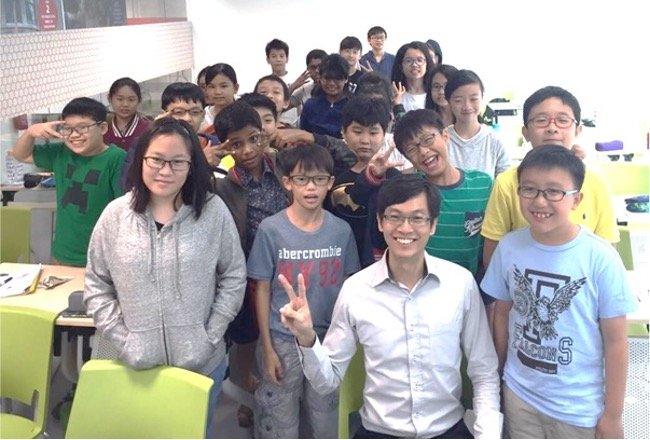
At Grade Solution Learning Centre, we are a team of dedicated educators whose mission is to guide your child to academic success. Here are the services we provide:
- Live Zoom lessons
- Adaptably™, an AI-powered learning platform featuring thousands of PSLE and exam-based questions tailored for your child’s practice. Adaptably not only tracks your child’s progress but also identifies their strengths and areas for improvement, providing valuable insights to enhance their learning journey.
- 24/7 Homework Helper Service
We provide all these services above at a very affordable monthly fee to allow as many students as possible to access such learning opportunities. We specialise in English, Math, Science and Chinese subjects. You can see our fees and schedules here >> https://gradesolution.com.sg/schedule/
2) Pre-recorded Online courses on Jimmymaths.com

If you are looking for something that fits your budget, or prefer your child learn at his or her own pace, you can join our pre-recorded online Math courses. Your child can:
- Learn from recorded videos
- Get access to lots of common exam questions to ensure sufficient practice
- Get unlimited support and homework help
You can see the available courses here >> https://jimmymaths.digitrio.online/our-courses/
